Hip-Hop Mourns The Loss Of Recording Engineer Bob Power
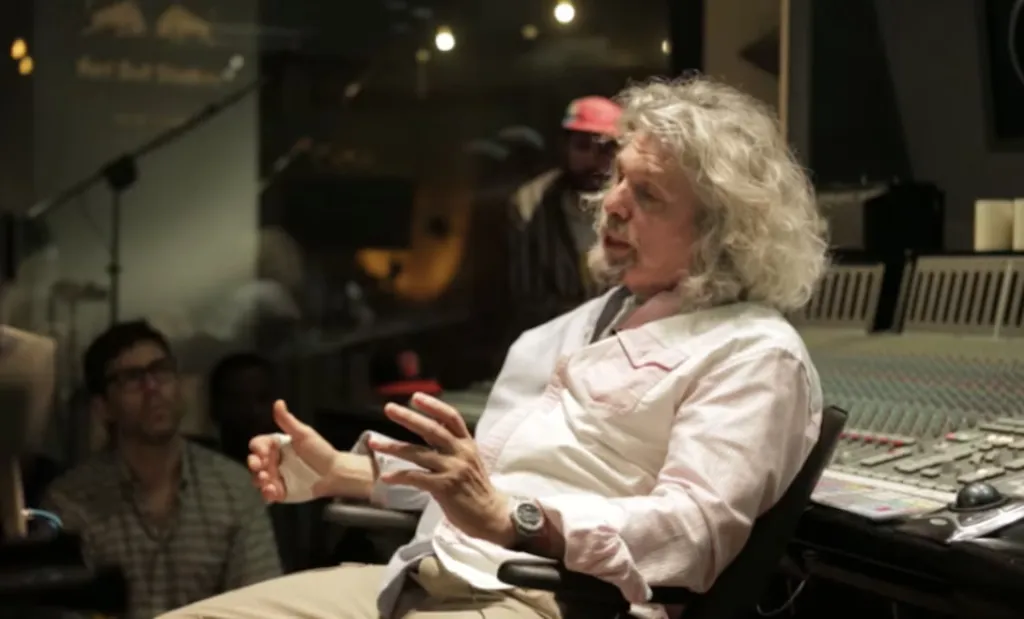
Bob Power, the longtime producer and recording engineer who worked with a bevy of notable Hip-Hop and R&B acts, has died. Bob Power’s musical sphere was especially vast, and many of those figures are sharing their thoughts and memories of the legendary engineer.
According to Wikipedia, Bob Power was born on January 2, 1952, in Chicago, Ill. He then spent stints in Westchester County, New York, and St. Louis ahead of attending Webster College in Missouri to study music theory. Power would go on to obtain a master’s degree in jazz from Lone Mountain College in San Francisco.


After launching his career producing original music for the PBS series Over Easy and working on several advertising campaigns for major brands, Power moved back to New York in the early 1980s. It was there that the owner of Calliope Studios asked Power to track sessions for the Hip-Hop band, Stetsasonic, who employed the engineer to work on the group’s 1986 debut album, On Fire. DJ Prince Paul, an important cog of the De La Soul sound, is also part of Stetsasonic.
Calliope Studios was also the main hub for many of the Native Tongues luminaries, such as A Tribe Called Quest, Jungle Brothers, and De La Soul. Power’s time as a musician and his sharp mind for music theory helped bring sample-based Hip-Hop to the forefront and launched many of the aforementioned acts into the mainstream, in what he referred to as the second wave of Hip-Hop.
In an especially detailed interview with Tape Op, Power shared his explanation of what he viewed as the second wave of Hip-Hop and how sample-based music and loops informed his production style later on.
From Tape Op (and we suggest reading the whole piece):
What changed production-wise between the first and second wave of hip-hop? The really big difference between the first and second wave of hip-hop, for me, is the use of samples. One of the reasons A Tribe Called Quest was so amazing is that it was the first time samples were used in a really elaborate musical construction — particularly the second album, Low End Theory. That was [Q-]Tip and Ali [Shaheed Muhammad]’s real genius. It’s an interesting point because the constructions, if you listen to Low End Theory musically, are very complex. If you had good session players sit down and play that, it wouldn’t sound the same because part of the cool thing about samples in hip-hop is that they weren’t meant to go together. As a guitar player, I would play on a new track without monitoring the old one, and it didn’t sound right. I soon realized, “Oh right, I’ve got to play to the old track to get it to sound right.” Another thing about sampling is that a hook can be a sound, and that’s really cool. So, I think the palette has gotten so much larger and more varied on every level. Stetsasonic were right on the end of the first wave, and Daddy-O and Prince Paul were visionaries, though they kind of got lost in the shuffle at that point. Their second record [In FullGear] was a brilliant sample-based record.
Power, a trained musician and guitarist, went on to produce for the likes of Me’Shell N’degeocello, The Roots, D’Angelo, and Erykah Badu at Sony Music Studios. His credits also extended overseas, working with British singer and songwriter Caron Wheeler. Power also worked with the late D’Angelo on his debut studio album, Brown Sugar.
Power served as an inspiration to many, including Grammy Award-winning engineer Young Guru and Q-Tip of A Tribe Called Quest fame. Online, the adulation for Power’s prowess on the mixing board and his influence on modern Hip-Hop and R&B have been pouring in. We’ve got those reactions below.
Bob Power was 74.
—
Photo: Red Bull Music Academy
Hip-Hop Mourns The Loss Of Recording Engineer Bob Power was originally published on hiphopwired.com



You May Also Like


