DAILY DILEMMA: Supreme Court Voting Rights Decision
- Supreme Court decision makes it harder to challenge unfair district maps, especially where race and politics are linked.
- Ruling could lead to reduced Black voter influence on local issues like policing, education, and community investment.
- Urgent need for high Black voter turnout to protect representation, as legal protections may no longer be enough.
The Supreme Court’s recent decision on voting maps has stirred deep concern because it changes how challenges under the Voting Rights Act of 1965 may work going forward. In simple terms, the fight over unfair district maps may now get harder to win in court, especially when race and politics are closely tied. That matters because in many Southern states, Black political power has often depended on legal challenges that forced fairer maps and stronger representation.
Roland Martin put the stakes in plain language during his interview. He said, “This Supreme Court, this right wing conservative Supreme Court, they’ve always wanted to kill the Voting Rights Act.” He also warned that the ruling reaches far beyond Congress: “This decision is going to impact state offices, county offices, city offices, school board offices. And so you’re going to see good representation wiped out all across the South.” That is why this ruling has caused so much controversy. For many people, it feels less like a legal technicality and more like a direct threat to community voice.
What does that mean for people and cities in the future? It means communities may have a harder time challenging district lines that weaken Black voting strength. Cities, counties, and school boards could see lines drawn in ways that divide neighborhoods and reduce the power of Black voters to elect candidates who reflect their needs. When representation shrinks, so does influence over policing, education, housing, transit, and local investment.
The urgency around voting is also backed by the public response. One caller on Majic 102.1’s Daily Dilemma said, “We gotta get out vote, bro, because right now it’s not looking good for us.” He added, “Too many people lost lives for us to have those rights… people of color, we need to get out and register, get out and vote.” Another listener said, “Nothing has been fair for us since forever,” capturing the frustration many feel when legal protections seem to weaken.
The numbers show why this moment matters. Black voter turnout reached historic highs during Barack Obama’s elections, with about 66% turnout in 2008 and roughly 67% in 2012 among eligible Black voters. In 2012, Black turnout slightly exceeded white turnout for the first time in modern history. Since then, turnout has shifted downward in some cycles, but Black voters have remained one of the most important blocs in American politics. Black voter registration has generally remained strong, often around the low-to-mid 60% range in recent national elections.
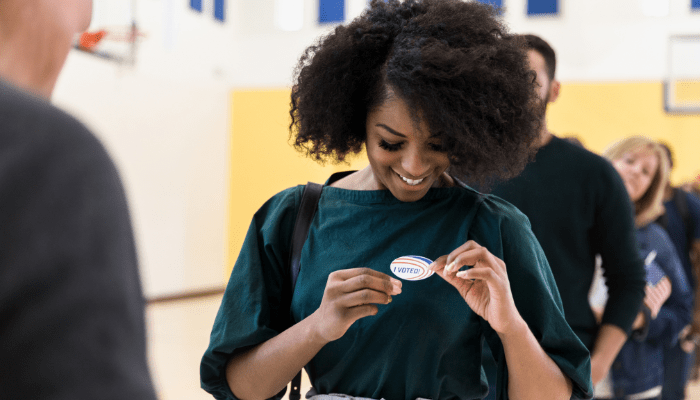
Voting matters now because the courtroom may no longer be enough. If legal protections are narrowed, the ballot becomes even more powerful. When people vote in large numbers, they protect representation, shape policy, and send a message that their communities will not be erased.
Vote!
Check out The Madd Hatta Show weekday afternoons and chime in with your thoughts and his Daily Dilemmas on Majic 102.1.
Check out what Roland Martin thoughts are below on the Supreme Court decision.
DAILY DILEMMA: Supreme Court Voting Rights Decision was originally published on myhoustonmajic.com


You May Also Like