Rumored 'Texas Serial Killer': Here's What We Know
Rumored ‘Texas Serial Killer’: What We Know About The Bodies Found In Houston Bayous
- Officials insist no evidence of a serial killer despite rising bayou body count in Houston.
- Drownings, homelessness, and mental illness blamed for many of the deaths, not a coordinated criminal pattern.
- Residents remain skeptical, citing the high number of deaths and their spread across state lines.
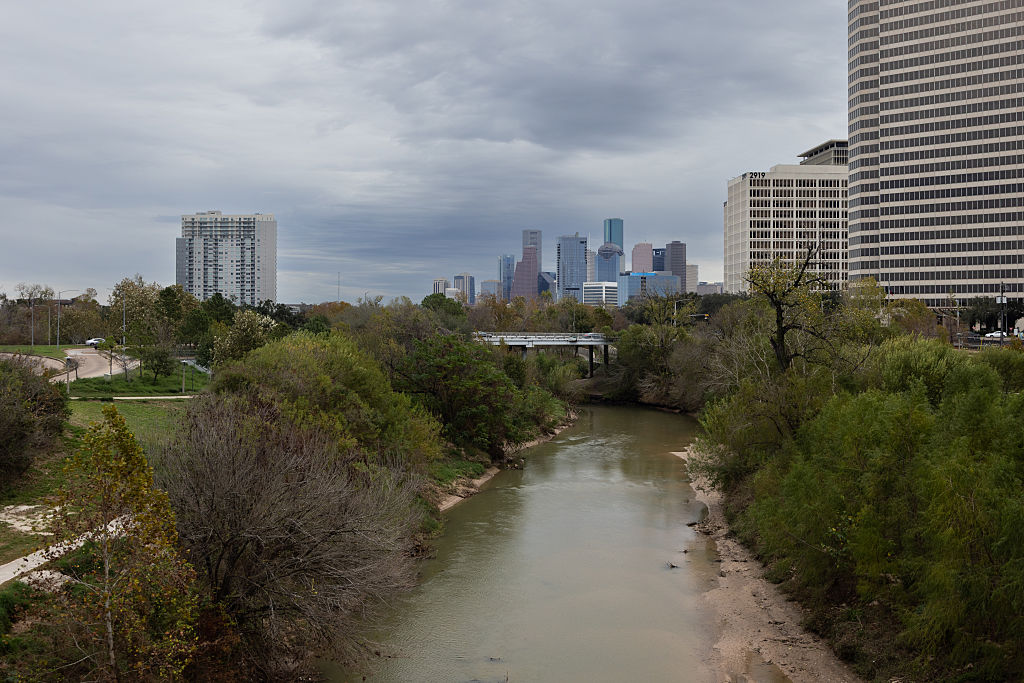
Does Texas have a serial killer? Authorities say no.
The recovery of three more bodies from Houston-area bayous last week has renewed public concern over a possible serial killer on the loose, even as officials continue to stress there is no evidence the deaths are connected to a Texas serial killer.
According to The Independent, the latest recoveries bring the total number of bodies found in Harris County bayous so far in 2025 to 34, just one fewer than the 35 recorded during all of last year. But fears of a Texas serial killer began to surface in the spring and most recently in September, when, as ABC13 reported, five bodies were recovered from bayous in less than a week, further intensifying public attention.
Notably, Houston’s bayou system has become a growing concern in recent years. A Houston Chronicle analysis of Harris County medical examiner records found that 201 deaths were recorded in county bayous between 2017 and November 2025. About 40% of the cases are classified as “undetermined,” meaning authorities could not determine whether the deaths were accidental, self-inflicted, or the result of a crime, KPRC 2 noted.
Some victims have made headlines.
But a few incidents and their circumstances have made national headlines, many of the cases involving Black residents of the Houston area. The death of University of Houston student Jade McKissic sent shockwaves across the city earlier this year. The college student was found dead in Brays Bayou on Sept. 16, police said, after she was reported missing five days earlier, Houston Public Media reported.
Houston police said they did not suspect foul play. They noted that McKissic, 20, “had spent the evening with friends at local bars.” Surveillance footage reportedly captured McKissic in “an intoxicated state” as she walked out of a nearby gas station and “towards the bayou.”
“She appears to be alone, and no one appears to be following her before she goes out of view,” police records state. McKissic’s cause of death remains undetermined.
Months later, on May 17, the body of 35-year-old Anthony Curry was found in Houston’s Meyerland area at 7:42 a.m., according to KPRC 2. Authorities ruled his death an accidental drowning, noting that PCP and ethanol were present in his system. But his sister, Alexis Curry, said she still needed answers. During an interview with the outlet on Oct. 13, she described Anthony as her “superhero” and couldn’t understand how he could have ended up in the city’s waterways.
“That ain’t my brother,” Alexis said. “He’ll go somewhere and chill off before he just go jump in some water.”
One police report obtained by the Houston Chronicle noted the tragic death of 15-year-old Dahmari Hayes, who reportedly “slipped and fell” into the Sims Bayou on June 2, 2022, while he was fishing with another youth. According to PEOPLE, authorities in Houston said the teen drowned after falling into a “deep spot” of a bayou near Scott Street. The teen’s body was recovered overnight by the Houston Police Department’s dive team and pronounced dead at the scene. Dahmari and his 14-year-old friend reportedly asked their parents for permission to go fishing in the bayou, but were told not to.
Officials say there’s no cause for concern.
Despite the rising numbers, Harris County District Attorney Sean Teare is pushing back strongly against speculation that has been circulating among Houston residents and on social media. He insisted that while each case is nuanced, there has been zero connection made to a Texas serial killer.
“There is nothing, nothing, and I want to be crystal clear, to indicate that there is someone operating here as a serial killer,” Teare said during a one-on-one interview with KPRC 2 on Dec. 29. “There are many reasons for these deaths. None of them are a serial killer.”
Officials say the deaths reflect broader social challenges rather than a coordinated criminal pattern. Teare pointed to issues including homelessness, mental illness, and substance abuse.
“We have massive mental health and addiction problem. All of those things are contributing to a lot of the bodies that we’re discovering,” he said.
Houston’s vast waterway system also plays a role. The city has more than 2,500 miles of bayous, many of which can be difficult to escape once someone falls in.
“It’s kind of a little-known fact, but when you get into the bayous, it is very difficult to get out,” Teare explained. “When you combine that with someone that is high on some substance, someone that is intoxicated somehow, it makes it even more difficult.”
Still, some residents remain unconvinced.
“The math isn’t mathing, I think there’s a serial killer,” said Juan Sandoval, who was visiting Houston, during an interview with ABC News 13 on Dec. 26. “I get Nevada’s ‘for you’ page now, and even in Nevada, they’re talking about Buffalo Bayou, so it’s that bad, it’s reaching another state, across state lines.”
His friend, Houston resident Erick Cortez, echoed that concern.
“There must be someone out there, no? Because it’s ridiculous that so many people are dying in the bayou, I think it’s unfortunate that they haven’t found the person,” Cortez shared.
Teare acknowledged that criminal activity does occur in some cases, but stressed that those incidents are isolated.
“Yes, there are times where we recover bodies that were placed in the bayou criminally, no question, but that is not something that is a regular occurrence,” he said.
City leaders have also addressed the speculation publicly. In September, Houston Police Chief Noe Diaz and Mayor John Whitmire held a joint press conference urging residents to stop spreading rumors about the deaths.
“For us as an agency, rumors stir fear and anxiety in our communities,” Diaz said at the conference, according to The Independent.
Whitmire said many of the deaths appear to be drownings, noting that bayou fatalities are not a new issue for the city.
“I grew up in Houston. Unfortunately, drowning in our bayous is not a new phenomenon… We have 2,500 miles of waterways in Houston,” Whitmire said, according to The Independent.
The Houston Chronicle analysis found that roughly 40% of bayou deaths since 2017 were attributed to drowning, with circumstances varying widely from case to case.
Officials continue to urge the public to rely on confirmed information as investigations remain ongoing.
SEE MORE:
2 Black Models Found Dead Days Apart In Los Angeles Spark Fears Of A Serial Killer
Killer’s Last Words: ‘President Trump, Keep Making America Great. I’m Ready To Go’
Rumored ‘Texas Serial Killer’: What We Know About The Bodies Found In Houston Bayous was originally published on newsone.com